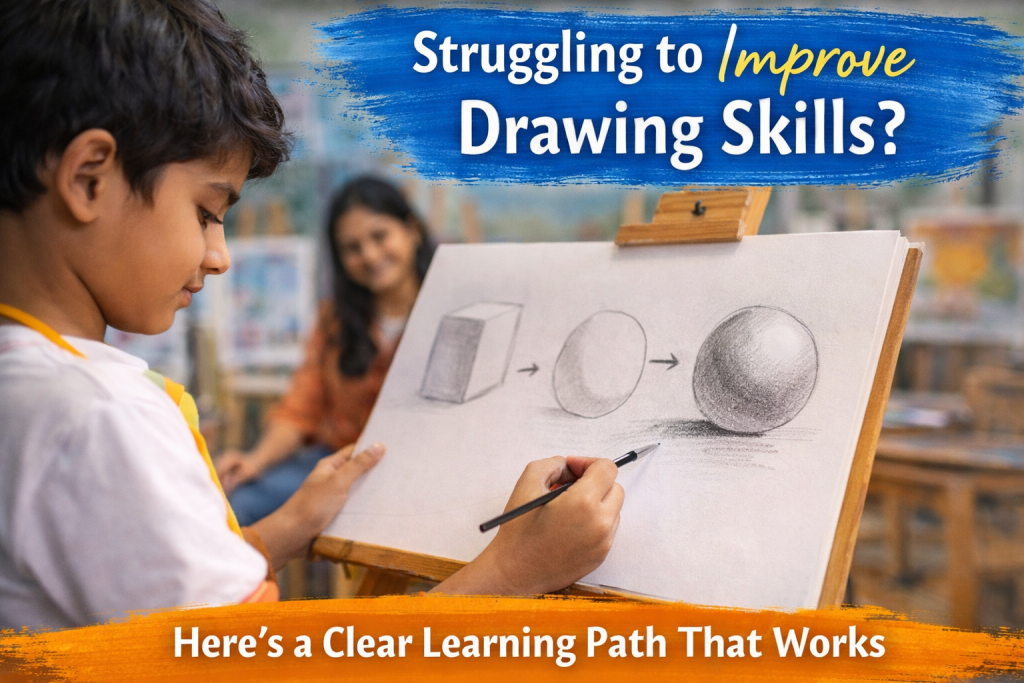
Struggling to Improve Drawing Skills? Here’s a Clear Learning Path That Works
Introduction
Many students love drawing and practice regularly, yet feel frustrated when their skills don’t seem to improve. They draw every day, watch tutorials, and try new ideas—but progress feels slow or stuck.
If this sounds familiar, you’re not alone. The problem is rarely a lack of talent. In most cases, the real issue is the absence of a clear learning path.
At Dreamweaver Art & Artist, we help students grow by following a structured, step-by-step drawing journey that actually works.
Why Drawing Practice Often Doesn’t Lead to Improvement
Most struggling artists face one or more of these problems:
-
Random practice without direction
-
Skipping basic fundamentals
-
Learning from too many online sources
-
No feedback or correction
-
Trying advanced drawings too early
Without structure, practice becomes repetitive instead of progressive.
The Importance of a Clear Learning Path in Drawing
Drawing is a skill that grows best when learned in the right order. Just like academics or sports, art requires fundamentals before complexity.
A clear learning path:
-
Builds skills layer by layer
-
Prevents confusion and frustration
-
Helps students see visible improvement
-
Keeps motivation high
The Clear Drawing Learning Path That Works
1️⃣ Start with Basic Shapes and Lines
Every drawing—no matter how complex—starts with simple shapes. Learning to control lines, circles, and forms builds the foundation for everything else.
Students learn:
-
Hand control
-
Proportion awareness
-
Observation skills
2️⃣ Understanding Light, Shadow, and Shading
Many drawings look flat because shading is missing or incorrect. Proper shading adds depth and realism.
This stage focuses on:
-
Light source understanding
-
Smooth shading techniques
-
Creating volume and depth
3️⃣ Learning Proportion and Structure
Good drawing isn’t about copying—it’s about understanding structure. Proportion helps drawings look balanced and realistic.
Students practice:
-
Measuring techniques
-
Breaking objects into forms
-
Correct placement of features
4️⃣ Gradual Introduction to Details
Details should come after structure, not before. Adding details too early often ruins a drawing.
This step teaches:
-
When to add details
-
How to enhance drawings cleanly
-
Avoiding overworking
5️⃣ Regular Feedback and Guided Corrections
Without feedback, mistakes repeat. Structured art classes provide guidance at the right time.
At Dreamweaver Art & Artist, students receive:
-
Personal corrections
-
Skill-based feedback
-
Encouragement to improve
6️⃣ Practice with Purpose, Not Pressure
Instead of drawing randomly, students practice with specific goals—one skill at a time.
This helps:
-
Faster improvement
-
Reduced frustration
-
Increased confidence
Why Structured Art Classes Make the Difference
Self-learning can inspire interest, but structured learning builds skill.
Our approach at Dreamweaver Art & Artist includes:
✔ Step-by-step curriculum
✔ Age-appropriate learning
✔ Small batch teaching
✔ Focus on fundamentals
✔ Continuous motivation
Students don’t just draw more — they draw better.
Who This Learning Path Is Perfect For
-
Beginners who feel stuck
-
Kids who love drawing but lack guidance
-
Students preparing for competitions
-
Anyone who wants visible improvement
Final Thoughts
Improving drawing skills isn’t about talent or copying artwork endlessly. It’s about learning what to practice, when to practice, and how to practice.
With the right structure and guidance, anyone can improve their drawing skills steadily and confidently.
✏️ Want a clear drawing learning path for your child or yourself?
Join Dreamweaver Art & Artist and experience structured art learning that delivers real results.
👉 Enroll now or book a trial class.

Leave a Reply